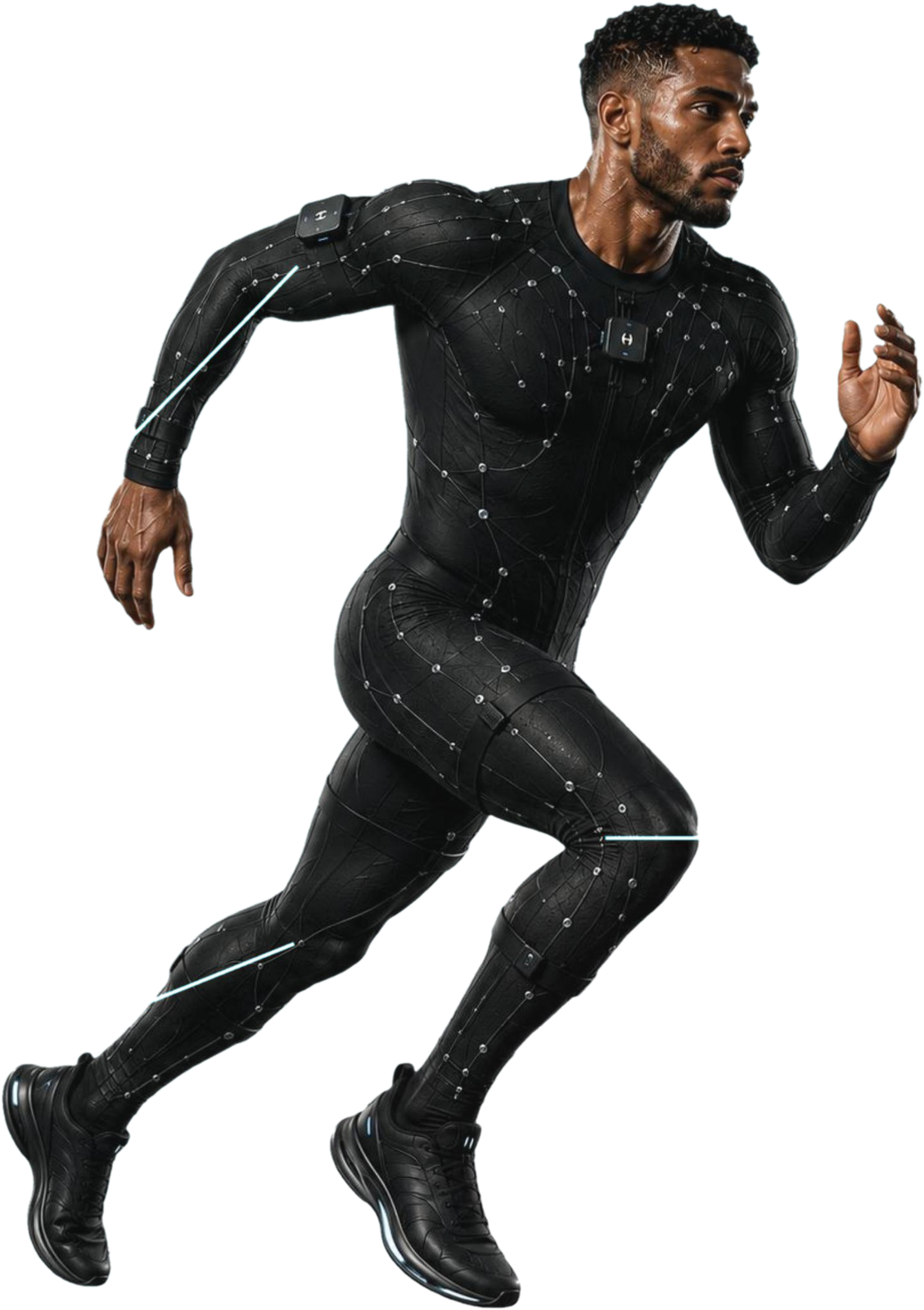
cognitive load 62% · reaction 201ms
fuel mix 62% fat / 38% carb
airbag armed · knee temperature normal
The human body will become anticipatory.
AI will know what your body is going to do before you do, and intervene to change what happens next.
First, prevent injury. Then extend lifespan. Eventually, bring humanity into the cybernetic age.
Hippos is building the closed-loop intelligence that makes this possible. The first loop already works.
The first Human Body Model.
AI has learned language, images, and proteins. It has never learned the thing closest to you: your own body. No machine on Earth knows how much you have left today, what tomorrow will cost you, or that your knee is three steps from giving out. Your body knows. It just cannot tell you in time.
We are building the model that can. Each hour of wear records one transition:
Every human body is moving through these states, every second of every day. The Human Body Model learns that transition: so AI can predict where your body is going, simulate where it could go, and eventually help determine where it goes next.
Sense. Predict. Intervene.
The model ships inside a closed-loop physical intelligence system. Its first form factor is a soft exoskeleton for the knee.
Each intervention changes an outcome. Each outcome teaches the model. The form factor is interchangeable; the same module embeds into anything the body wears.
The model needs data that does not exist.
No dataset records how real bodies move, load, fatigue, and fail over months. We started with the application valuable enough to pay for its collection: injury prevention, deployed with the people who push their bodies hardest. The signal that predicts failure lives in the tails of the distribution.
The three deployments are complementary: defense records the body under sustained load, sport at its explosive limits, rehabilitation through failure and recovery. Together they span a state space no single environment can.
A model trained on both extremes generalizes inward to ordinary movement. The dataset is 8 billion human bodies.
What the model unlocks.
Every deployment grows the first longitudinal, outcome-labeled record of the human somatic system. The system stays the same. The model makes it capable of more, and each stage has buyers who already pay for the problem. A single torn ACL means surgery, roughly $50,000 in costs, a year or more of rehabilitation, and often a knee that is never the same: about half develop arthritis within twenty years. And that is one ligament in one joint. The body has hundreds.
The wedge is a soft exoskeleton. The endpoint is intelligence in everything the body wears.
The center of the movement distribution is already collected by every phone and watch. Hippos instruments the two tails, where the data is rare, hard-won, and predictive of failure.
Hippos Launch Film →
August 2026The public introduction of the Hippos defense program, featuring Capt. Marco Romani, U.S. Navy (Ret.), senior procurement and contracting officer, Hippos advisor and investor.
Hippos Wins First Place at SportsLand →
June 2026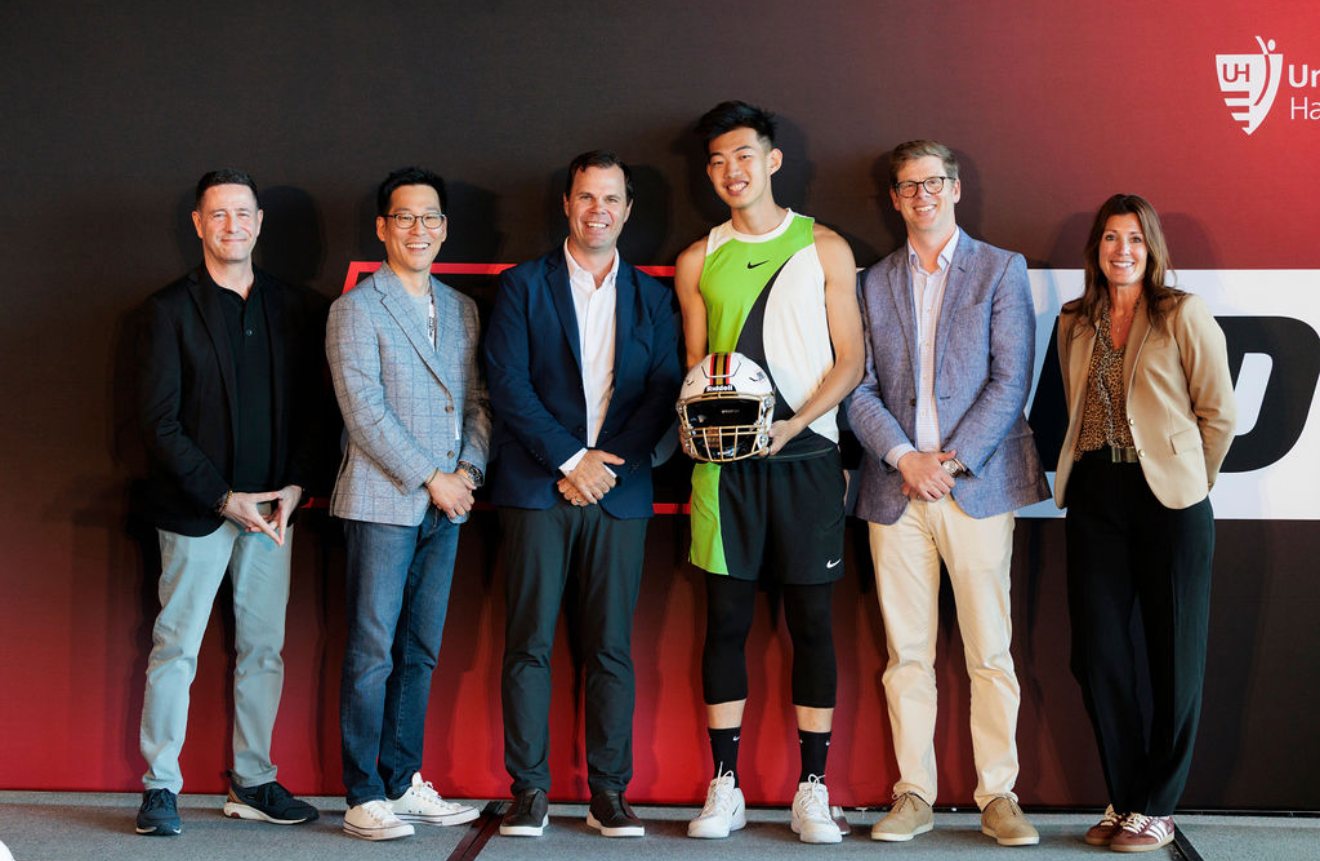
First place out of 83 companies at the SportsLand Summit in Cleveland, hosted by University Hospitals and Plug and Play. The win carried a $30K equity-free grant and a strategic investment from UH Ventures, the venture arm of University Hospitals. The hospital system running our replication study is now also on the cap table.
Hippos Deploys with the United States Army →
May 2026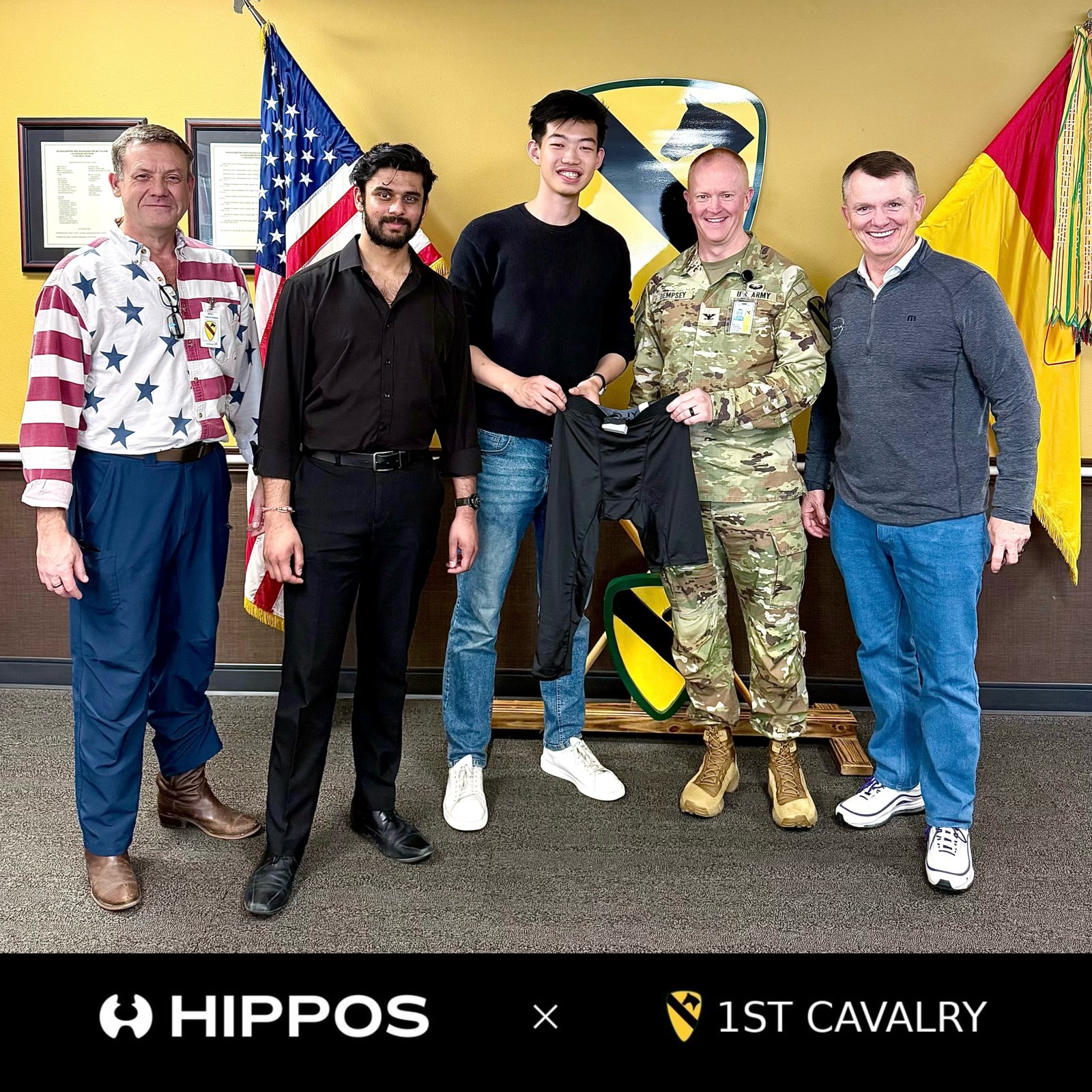
First defense field deployment with the 1st Cavalry Division, the United States Army's premier armored force and one of its largest at 24,000 soldiers, known across America as the First Team. These active-duty soldiers anchor the lower tail of human movement: sustained load-bearing, dismounted operations, the cumulative physical stress of field soldiering. Durability data at the far edge of human tolerance, captured on the body in conditions no lab or consumer device can reproduce.
Hippos Deploys at Elite Sports Academy SPIRE →
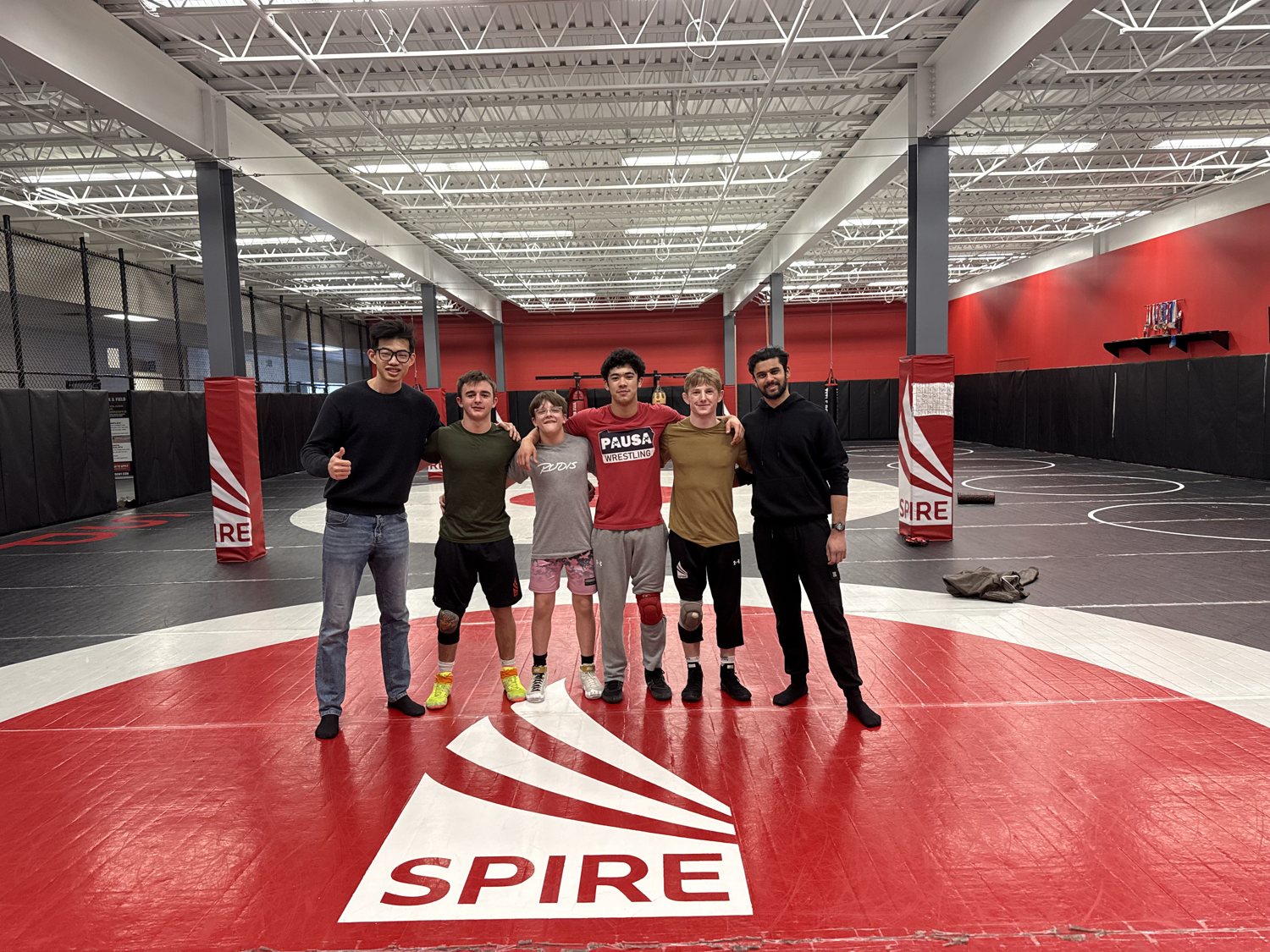
February 2026The academy that trained NBA guard LaMelo Ball. First sports deployment at one of the country's leading athletic programs. These athletes anchor the upper tail of human movement: peak velocity, acute loading, the cut, the jump, the landing. The high-rate moments where the knee fails, captured continuously across a full competitive season.
Cross-Site Replication of On-Patient Detection · with University Hospitals
Second clinical site, second examining surgeon, repeated pivot-shift protocol supervised by Dr. Jacob Calcei. 100% within-patient injury classification in 2D latent space and 98.4 to 99.6% in 3D; clearest separation in femoral rotation rate, with non-overlapping interquartile ranges. 96,589 labelled data windows across repeated trials; real-time localization of injury windows from raw 12-channel streams. (n=2)
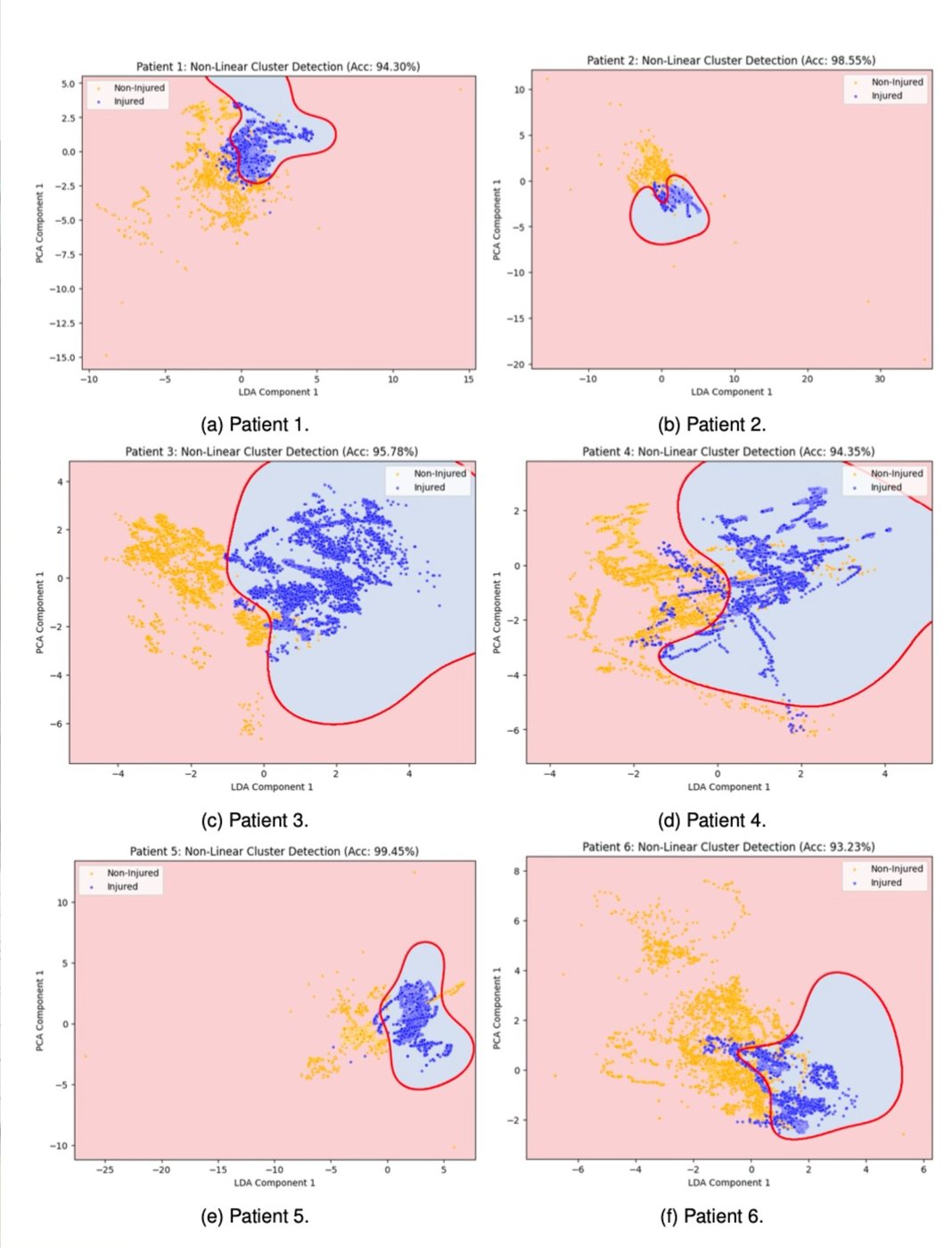
Detecting ACL-Deficient Kinematics In Vivo · with Rush University Medical Center
First labeled in-vivo dataset of ACL failure biomechanics on living humans. ACL-deficient knees exhibit 22% greater rotational displacement and 58% faster rotational rate than healthy controls. Model accuracy 93 to 99% distinguishing ACL-deficient from healthy kinematics on individualized profiles; 75% precision localizing the injury window within a movement sequence from raw sensor data alone. (n=6)
Longitudinal In-the-Wild Biomechanical Capture · with SPIRE Academy
50+ hours of continuous high-intensity biomechanical data across 15 elite athletes: sprinting, cutting, jumping, contact scrimmage. First longitudinal in-the-wild dataset of its kind. Zero skin irritation, overheating, or measurable performance impairment.
Valgus Reduction in Single-Leg Landing · Hippos internal study
Live-subject quantification of active intervention across 17 athletes and three intervention designs in the dominant ACL injury scenario. Peak valgus angle change reduced from 6.1° to 1.95°. Engagement within the ~60ms injury window. Faster than neuromuscular reflex.
Rotational Restraint Under Controlled Cadaveric Load · with Cleveland Clinic
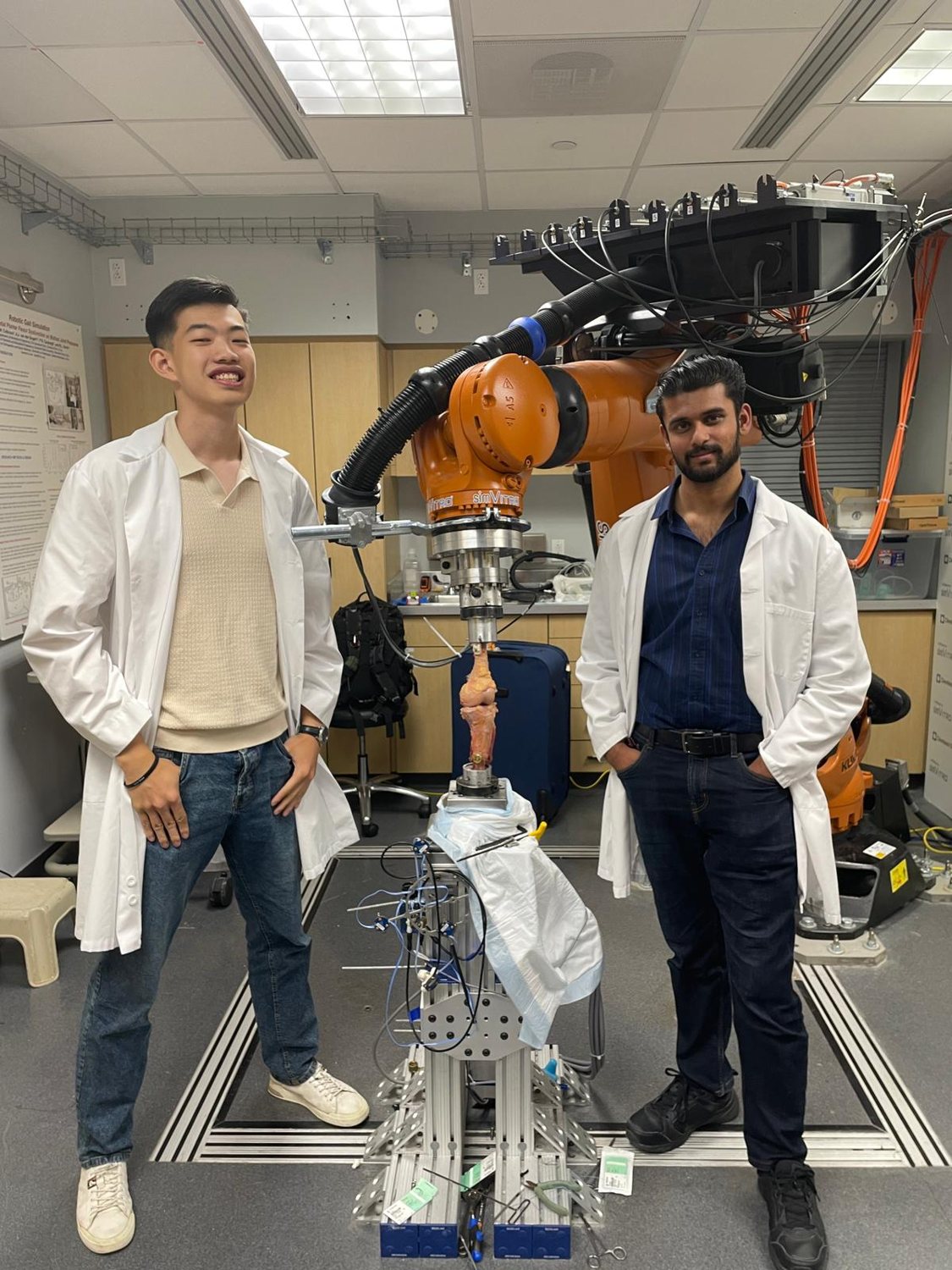
Robotic ex-vivo quantification on Cleveland Clinic's simVITRO bio-robotics platform. 10 to 25% reduction in tibial rotation under constant torque across flexion angles, with angle-dependent protection increasing at flexion. No coupling into adjacent kinematic axes.
Cross-Task Kinematic Generalization · with Edge Hill University / UK Athletics
Multi-task biomechanical capture across change-of-direction, drop landings, deceleration, and gait. 10-camera Qualisys motion capture and dual Kistler force plates at 2,000Hz. Intervention halted knee flexion in 11 of 11 activations without compensatory loading at hip, ankle, or trunk in 55% of trials.
Real-Time Valgus Detection and Triggered Intervention · with UK Athletics
Computer-vision biomechanical analysis via reflective markers during single-leg jump-landing, with intervention triggered in real time on valgus-angle thresholds. 68% decrease in valgus angle on triggered intervention; reductions of 1 to 1.5 degrees against a normal jump-landing valgus range of 5 to 9 degrees. Supervised by Dr. James Brown, Lead Sports Medicine Doctor at UK Athletics.
Sub-30ms Closed-Loop Intervention Latency · with UK Athletics
Closed-loop benchmarking on anatomically-accurate synthetic knees (3D-printed bone + ballistic gel, ~90% human fidelity). 6,400Hz on-device sensing; mean deployment 30ms; 0.15% false positive rate across 54 live cartridge deployments and 4,000 computational simulations. Supervised by Dr. James Brown, UK Athletics.
A digital control system for the human body.
The human body will gain an intelligent layer of its own. It will understand what you are trying to do. Predict how your body will respond. And assist your body in doing it.
First, prevent failure. Then preserve capability. Then improve it.
We are making the human body anticipatory.
The institutions deploying us. The people running them, invested in us.